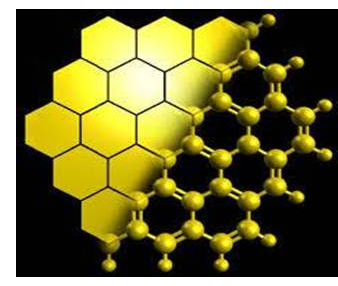
Using advanced radio and infrared observations, scientists detected large carbon-based molecules, indicating that the disk has become a chemically active environment. These hydrocarbons are considered key precursors to more complex organic compounds, which may eventually contribute to the formation of planets and, potentially, life-bearing systems.
The findings challenge earlier assumptions that harsh stellar radiation only destroys complex molecules. Instead, the study shows that such radiation can also drive chemical complexity under the right conditions. This discovery offers crucial insights into planet formation processes, the evolution of protoplanetary disks, and the possible origins of organic matter in planetary systems, including our own Solar System.